
Backing in members
My experience with the NUW in the 2010s.

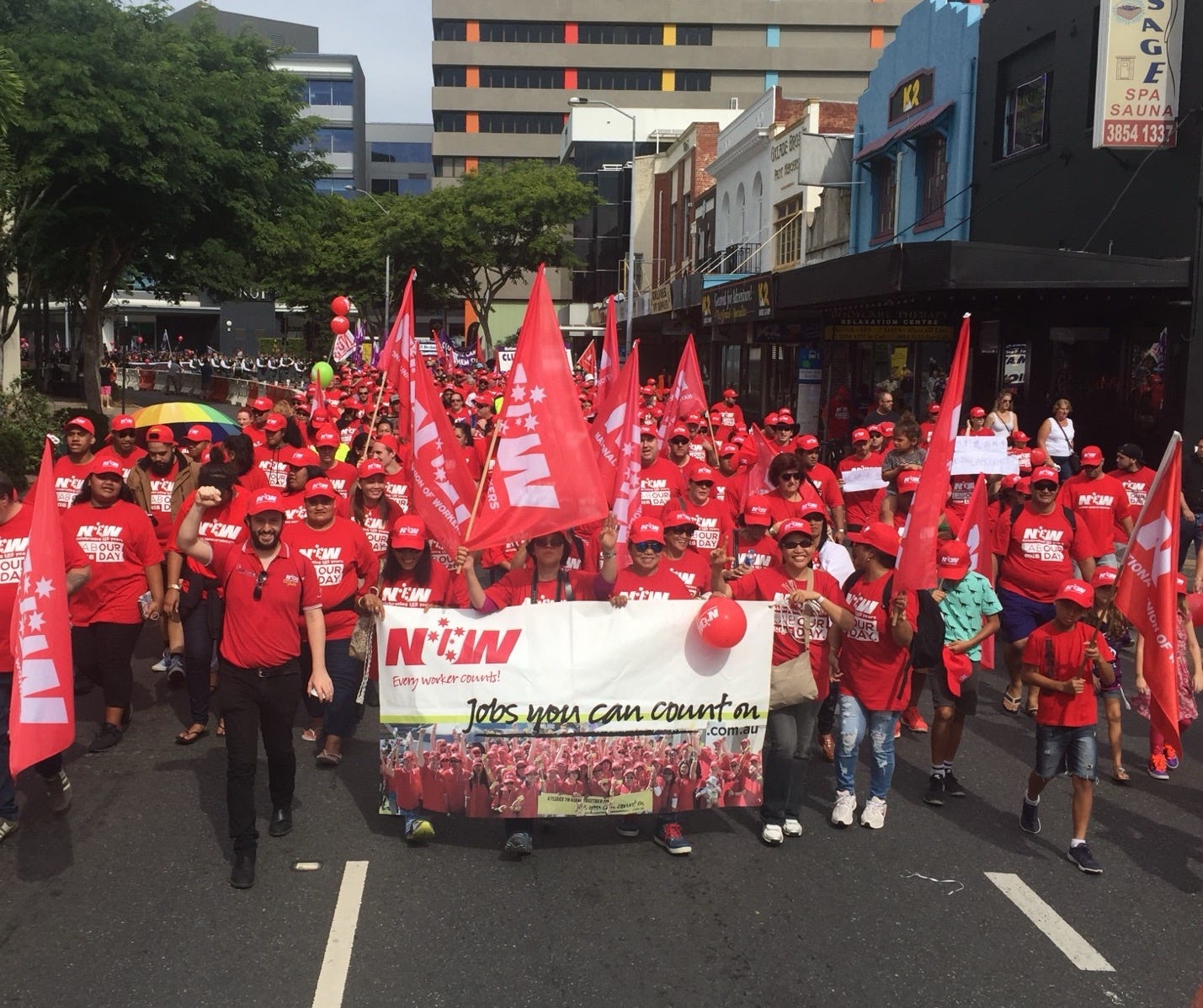
Members First is running on a positive platform that backs in members with more organisers, better delegate support and real funding for members to take collective action on issues that matter to them.
Backing in members not only builds worker power but it is also measurable in a Union’s financial accounts. Good organising is good governance. I have seen this first hand as witness to Tim Kennedy’s record as a leader in the then NUW from 2010.
The record of financial management in Victoria
In June 2010, Tim was elected as Victorian Branch Secretary. He held the position for one-term. In only four years, Tim drove a significant improvement in the financial health of the Victorian Branch. In a few short years, the total asset base increased from just under $18m to just over $29m as at June 2014.1 This is more than mere asset inflation but reflects an increase in membership contributions over the term too. Income from membership income went up by just under 20% over the term.
From the beginning of Tim’s leadership until the creation of the United Workers Union, the Victorian Branch ran seven figure surpluses each and every full financial year. This resulted in it accumulating total assets of $41m (more than doubling in just under a decade).
Behind the numbers
Too often workers experience a healthy balance sheet as a decline in the quality of their lived experiences. The Victorian Branch, however, did not achieve this through austerity but rather investment in members.
Tim drove a leadership culture that backed in members, delegates and organisers to win on the job. During this term there were delegates conferences (statewide, regional and industry-based), a significant uptick in delegate education and training, plentiful merchandise, more organisers hired visiting more workplaces, investment in the union’s digital infrastructure and capacity, and annual family picnic days for members and their families.
Backing in the members extended to a series of landmark disputes that started with the distribution workers at Woolworths Hume in 2010, a two-week hard picket at Baiada poultry fighting for the rights of cash in hand contractors, outsourced Coles warehouse workers striking in Melbourne’s north, a big strike for new union workers at Super Amart, and even an old-school factory occupation. The operational surpluses in the financial reports reflected a developing union culture.
Even then Tim was looking for ways to deepen and broaden worker solidarity beyond single enterprise bargains. Tim’s speech to the 2011 Victorian delegates conference laid out a vision for taking up the fight against power to a wider field and drawing in insecure workers in the struggle. This speech turned into the Jobs You Can Count On campaign — its heart was not passive lobbying but intensive delegate education and solidarity building between permanent and insecure workers within then NUW workplaces. The idea being that from this emergent solidarity new struggles for dignity and respect in the workplace would take place.
In 2013, Woolworths warehouse worker in regional Victoria took Tim’s message to heart and won a 10-day strike for job security and wage justice.
Becoming National Secretary
In 2014, Tim was elected as NUW National Secretary. Very early in his term as National Secretary Tim used the internal goodwill and solidarity built up in his four years as Victorian Branch Secretary to institute national organising teams. The NUW National Office and Victorian Branch acted as one operational unit in substance. There were high levels of solidarity, cooperation and team work. Extra staff were employed through the National Office, and organised across Australia (including in Victoria).2 This 2015 piece from renowned IR and investigative journalist Ben Schneiders gives a sense of the vibes.
The national organising teams started with the Farms campaign in 2015, which kicked off publicly with the 4 Corners Slaving Away episode.
The Australian farms sector was subject to some of the worst cases of labour abuse and exploitation with migrant workers subject to murky cash contracting arrangements. Wage theft, violence, bullying and sexual harassment was rife. The idea behind going all in on this sector is that many of the worst instances of insecure work started in the farms sector. If workers in this sector could successfully stand up and fight back it would act as a beacon of hope. It worked. Thousands of workers joined, wages often tripled in workplaces, union organisation was built and the worst instances of exploitation were smashed. It built up a confidence through the then NUW that any group workers could stand up, fight and win.
Soon the national organising team model expanded from farms into food manufacturing, logistics and general manufacturing. This was not one part of the union subsidising another. This was a new way of working to ensure every member could exercise more power on the floor.
From this work delegates across industries such as supermarket warehouses, third party logistics, poultry and dairy got to know each other, cooperate and build trust. Both the Polar Fresh/Coles 2016 strike and the March 2019 Chemist Warehouse strike of logistics workers across Victoria and Queensland with their big wins proved the model.
The November 2021 Toll strike of 1,200 members across seven distribution centres in Victoria, New South Wales and South Australia, Australia’s first farm strike in decades in June 2023, the September 2023 strike of over 1,000 Ingham workers in Perth and Adelaide, the October 2023 Victorian dairy strike of over 1,400 workers across 13 sites, and the November 2024 groundbreaking Woolworths warehouse strikes against algorithmic management all had their genesis in the trust built from the mid-2010s.
Like with the earlier experience at a Victorian Branch-level, this investment in members worked financially. The combined national union working as one operational unit was in a strong financial position.
Across the national union, the record of this decade of putting members first in the NUW resulted in a just under 50% increase in total membership contributions, and an increase in assets from $28.65m to $54.95m across the 2010s. Tim stewarded a vibrant, collective union culture where many organisers, delegates and members stepped up when given the chance.
It was a union in motion straining to turn the tables against decades of entrenched corporate dominance. It was a union whose health was predicated on investing in members — all of them. Our watchword was every worker counts.
This was the context in which we approached the merger to create the United Workers Union. We needed to give up our positions to go wider, and deeper into the working-class.
So when it comes to a union leader’s track record, it is useful to check out the publicly available financial reports, and work through the context behind the numbers.
The then NUW financial reports are here. The United Workers’ Union and previous United Voice financial reports are here.
All monetary figures are in Australian Dollars, and all data is sourced from audited financial accounts publicly available on the Fair Work Commission website.
This did not include New South Wales. The full story is for a separate post but at the time there were two operational units to the NUW — NSW and everywhere else in Australia. So when I refer to the national union in this context I mean the National Office and Victorian Branch (which operationally did not include NSW).