
Liberate the brooms!
Chapter 7. Part III. Organising for ownership strategies - expanding existing LMFs.

Organising for ownership means workers collectively struggling against capital. It is not just a matter of finding pre-existing cracks in the system, it involves direct confrontation with those who occupy positions of privilege and control.
It will involve workers, students and community members cooperating and acting together to win concrete gains for working class power. Organising customarily involves targeting people in positions of authority and using people power to put them under pressure to make a decision that benefits people. This also holds for organising for ownership. This particularly comes into effect for decisions around the awarding of service contracts in the public and social sectors. Of course, the opportunities for expansion grow as more new LMFs are incubated over time.
The Cleveland Model
The expansion strategy draws inspiration from the Cleveland model adopted by the Evergreen network of cooperatives in Cleveland, Ohio.1 The strategy behind the Cleveland model is to identify what is known as anchor institutions in a community. These are the collective institutions necessary for the reproduction of a community like hospitals and universities and as such are anchors of social wealth. The idea is to organise to win contracts for LMF enterprises with these anchor institutions. In the Evergreen network this includes contracts providing fresh fruit and vegetables and laundry services to local hospitals.
While it must be recognised that the wholesale and unquestioning transplantation of an organising strategy from one social context is often problematic, there is reason to believe that aspects of this approach could work in Australian society. Too much of Australian public life involves a contest between elites over extracting profits from the common wealth. It has been like this since 1788. The privatisation of social services is a feature pioneered by the Australian neoliberal settlement and exported to the world.
The privatisation and outsourcing of many services which were previously provided by public sector workers in Australia, however, opens up the opportunity to make the decision to award a contract a matter of political contest.
Opportunities for struggle in a post-privatised and outsourced landscape
Privatisation and outsourcing, as strategies for greater elite control over the people, themselves open pathways toward common ownership. There are different scenarios where this might occur in Anglophone contexts.
First, let’s consider university campuses. Generally speaking, administrations run universities along corporate management principles. Vice-Chancellors are paid large sums and as a rule move in the same social and professional circles as the political and corporate elites. This means that students are increasingly treated like both customers and products. University staff, academics and support staff alike, are treated as workers to be squeezed.
Of course, universities are not just like any ordinary business. They are vital institutions in the network of support for humanity’s common knowledge and accumulated experience. The process of wringing profits from this common resource produces many strange and unintended consequences. One of these is that the university campus is a relatively fixed source of community prosperity where highly educated people, both students and staff alike, are treated like relative garbage. Universities are loose threads in the web of elite control just asking to be unravelled.
Organising for ownership in education
One example where this could play out is a campaign at a university campus around the awarding of a cleaning contract. Activist students, union academic staff and cleaning workers themselves could come together to campaign for the university administration to award the new cleaning contract to a cleaning worker cooperative. If a layer of cleaning workers have been educated around LMFs and cooperative models, and want to take the opportunity to claim jobs of their own, then there will be a ready supply of worker-owners who can make a new democratic enterprise work or at least help an existing one expand. Activist students can help to provide a supporting layer of people who will take actions in support of the campaign, and perhaps seize the opportunity to educate their classmates about socialism in action. Union academic and support staff can make the outsourcing of contracts for support services a core part of their bargaining round which helps them build a layer of supportive and organised workers which were previously disorganised and fragmented.
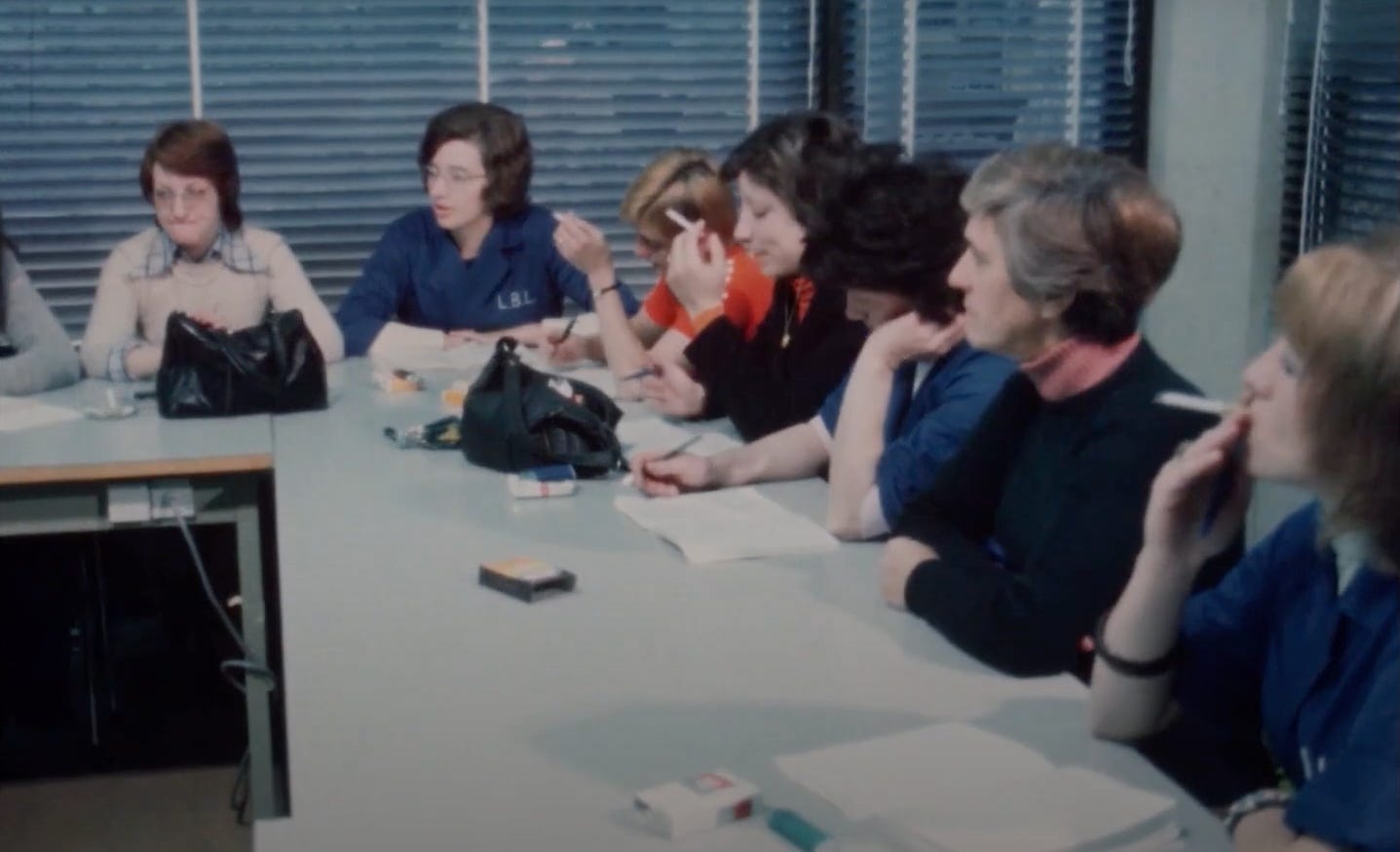
This is not a mere hypothetical. Fifty years ago, cleaners at a Belgium university set up their own cleaning cooperative, the Liberated Broom, and organised to get management to award the cleaning contract to them. These cleaners won better pay, greater control over their hours and the right to direct their work. I highly recommend learning more about the workers behind the Liberated Broom. Read or watch their story.
Healthcare
A similar dynamic could play out with a catering contract for a hospital. There remain strong unions in hospitals even if not all workers are treated equally. Many functions within hospital and health networks are outsourced and catering is often one of those functions that even supposedly progressive leaders will flog off to the private sector.
Most of the key capital and equipment for the kitchen facilities are an inseparable part of the physical hospital building. There are still strong groups of organised workers, such as nurses and other medical professionals, in hospitals. Campaigns to replace outsourced contracts within a hospital offers those workers an opportunity to better defend their industrial interests from creeping corporatisation. Patients and their families would have an interest in the improved quality of services that would come with the expansion of LMFs at the expense of corporate service providers.
Organising for the expansion of LMFs in the disability and home care sectors covered by the National Disability Insurance Scheme (NDIS) is another area of potential expansion.2 The NDIS funding model is placing pressure within the system such that it is opening up the sector to large corporations at the expense of smaller community and social providers.
LMFs represent an alternative way of coping with these same pressures in the short-term while providing a power base from which to transcend such pressures in the medium to longer terms. The fact that one of Australia’s largest worker cooperatives, The Cooperative Life, already operates in this space is no accident. Moreover, the largest union cooperative in the United States are the 2,300 worker owners and SEIU 1199 members in Cooperative Home Care Associates based in New York City. There is, therefore, strong potential to organise for the expansion of LMFs in the broader NDIS field, and perhaps even for this to become the dominant form of enterprise in the sector.
Organising for ownership in the health and education sectors activates workers in strategic nodes of economic and social power that hospitals and universities often represent in post-industrial communities. This concretely means that the struggle to win one small contract for laundry services at a hospital or cleaning services at a university may have an outsized impact on a larger group of workers who work directly at the relevant facility and in the community that springs up around them.
This should give workers more confidence to struggle for a better society. Not every campaign like this would succeed but all that is required is one breakthrough. For when it comes to organising for ownership, the thing to remember is that the elite have to win every single battle to maintain their grip on our collective wealth. The people, on the other hand, only need to win once. One breakthrough at the right time and place changes the calculus of the possible. The idea that there is no alternative to the way things are is not the extent of physical reality but a cold grey wall defending the status quo. It can seem imposing but once it is breached, the flood of possibilities soon follows.
Once the dam is broken, there always remains the possibility of currents being temporarily reversed or diverted even if they can no longer be contained. This is especially true if democratic ownership remains a niche domain where elite decision-makers can choose between a corporatised service provider and a worker-owned enterprise in some areas of what was once known as the public sector.
After all, that which is more easily won tends to be more easily lost. The tragic conclusion to the Liberated Broom tells us that a single beacon of worker ownership it not itself a challenge to the system.
This is why campaigning around contract changes should remain but one of a number of pathways within organising for ownership. Even within a framework of expanding existing LMFs, confrontational organising around contract decisions, is just one mode of work. As more and more LMFs are incubated, so too will the potential for the exercise of solidarity between such LMFs grows. For instance, CoPower used part of its financial reserves to improve member services by subsidising the Earthworker Energy Manufacturing Cooperative and the Earthworker Smart Energy Cooperative to provide discounted services to CoPower households.
Fundamentally, organising for ownership is not about building single cooperatives but a thriving ecosystem or federation of cooperatives that will continue to grow beyond the lifespan of any one single enterprise.
This post is the third post of chapter seven which is the second chapter in part three of the overall project. Part Three is Solidarity Beyond Wage and takes a look at the possibilities of solidarity beyond wage labour within the capitalist system. Use the about page to locate where you are in this broader project.
The NDIS is a national disability funding scheme in Australia that operates on a neoliberal funding voucher model which inherently squeezes sole providers and community groups.
Your characterisation of universities is spot on. Interesting ideas about how to shake things up.
“….First, let’s consider university campuses. Generally speaking, administrations run universities along corporate management principles. Vice-Chancellors are paid large sums and as a rule move in the same social and professional circles as the political and corporate elites. This means that students are increasingly treated like both customers and products. University staff, academics and support staff alike, are treated as workers to be squeezed….”
You wouldn’t know the half of it Godfrey
I was in university admin 1980s the cusp of change as HECS was foisted on Australian students and international funds were warping our education
In govt Reaganomics was disaster, in universities it redefined economics and social studies teaching leaving us with politicians locked in fake mantras